
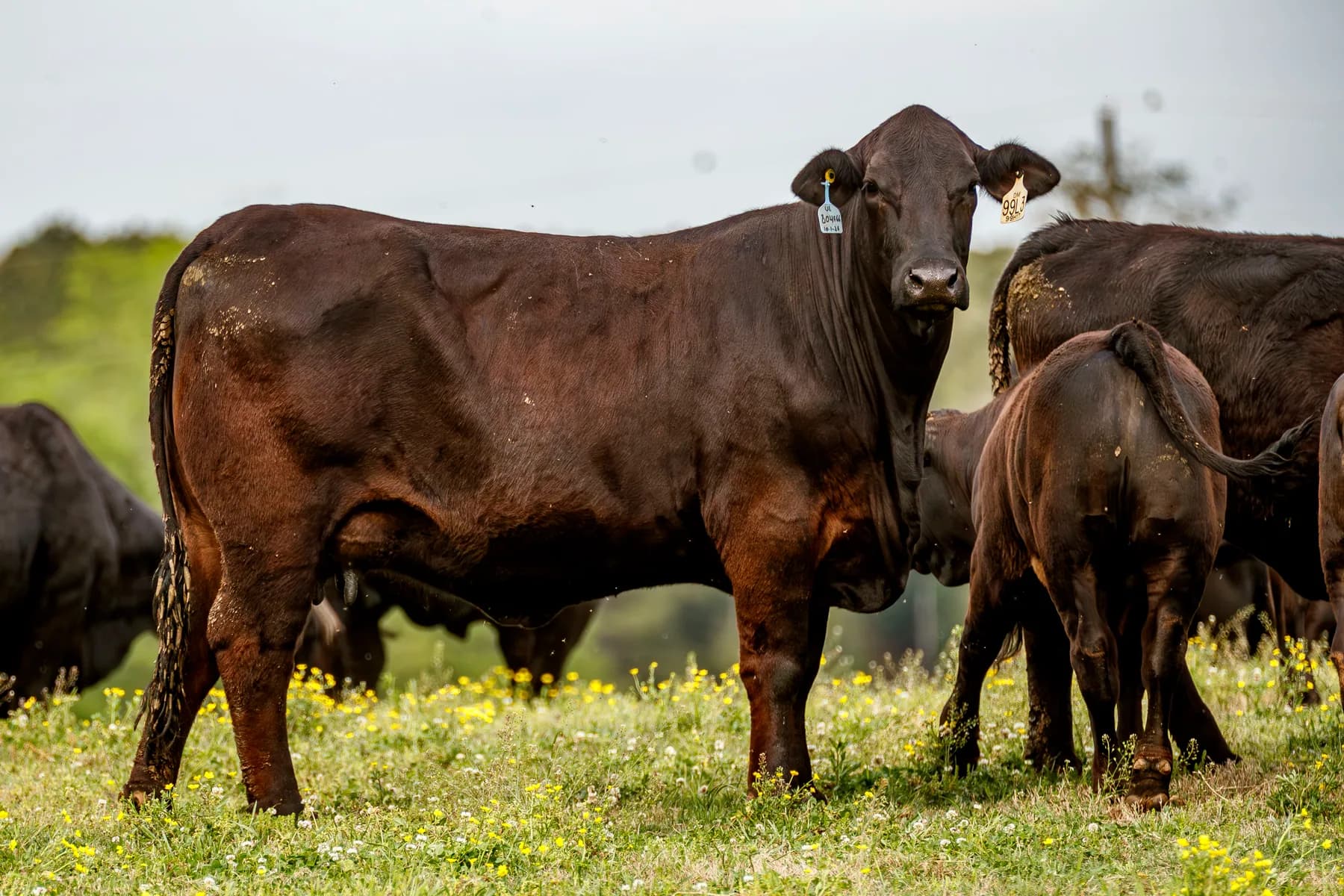
If you have searched for Brangus breeders in the last year, you already know the field is crowded. Every program promises elite genetics, sound structure, and "the next great donor." For commercial cattlemen and seedstock operations alike, the hard part isn't finding a Brangus seller — it's finding a Brangus breeder whose decisions you can trust two, five, and ten generations down the road.
At Las Paloma's Ranch, we breed registered Brangus cattle in Newnan, Georgia, and consign females to sales across the Southeast. This guide is the same checklist we'd give a friend who is buying a bull, a bred heifer, or a donor prospect — what to ask for, how to read the paperwork, and the red flags that should make you walk away.
What "Registered Brangus" Actually Means
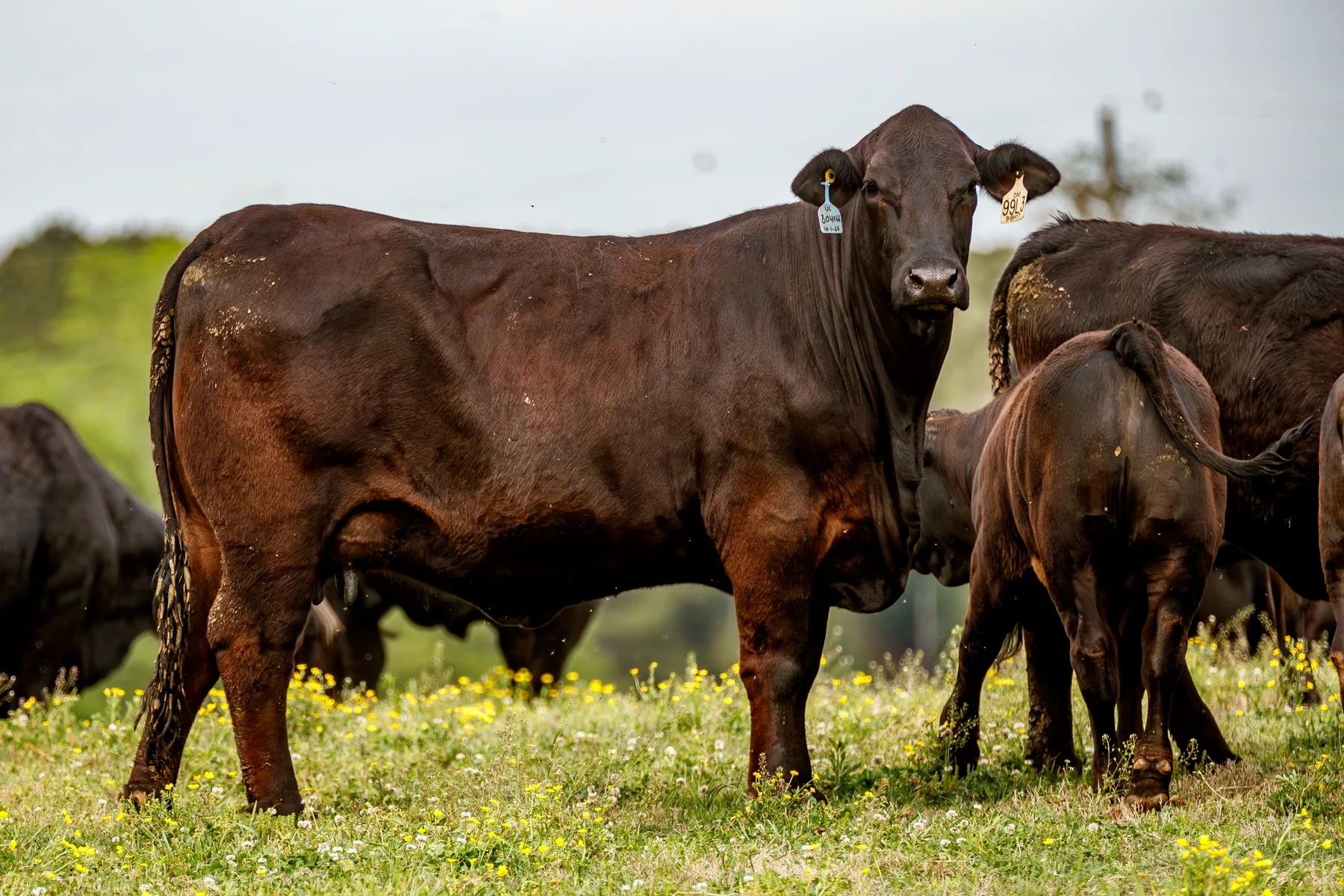
A registered Brangus animal is recorded with the International Brangus Breeders Association (IBBA) and meets the breed composition standard: 3/8 Brahman and 5/8 Angus, solid black, polled, and traceable through a verified pedigree. That registration is more than a piece of paper — it is the receipt for everything the breeder is claiming about the animal.
When you buy from established Brangus breeders, you should walk away with:
- An IBBA registration certificate with the registration number (usually
R10######for full Brangus orUB10######for UltraBlack), generation, color score, and scur score. - A multi-generation pedigree — typically going back three full generations on both the sire and dam side.
- Current EPDs (Expected Progeny Differences) updated with the latest IBBA run.
- Production records — adjusted birth, weaning, and yearling weights with herd ratios.
- Ownership history showing who bred the animal, who currently owns it, and when ownership transferred.
If a seller can't produce all five, you are not actually buying a registered Brangus animal — you are buying an animal that looks Brangus. That is a categorically different purchase.
How to Evaluate Brangus Breeders Before You Buy
The best Brangus breeders are not always the loudest at the sale. Use this short due-diligence list before you raise a hand on any lot.
1. Look for Continuity in the Cow Herd
A serious Brangus program has a consistent cow family — daughters of donors that come back into the donor pen, multi-generation maternal lines, and recurring grand-dams across the catalog. Ask the breeder to show you the dams of the lots they're selling. If every animal in the catalog has a different dam line and you can't find any of those females on the ranch, you are looking at a trader, not a breeder.
At Las Paloma's Ranch, several of our prospects share the same elite dam — for example, our LP MS Business Line full siblings trace back through cow families that have been retained and built on for multiple generations.
2. Read the EPDs in Context
EPDs are powerful, but a single number out of context is worse than no number at all. When evaluating Brangus genetics, look at the whole picture:
- Calving Ease Direct (CED) and Birth Weight (BW) for heifer-safe sires.
- Weaning Weight (WW) and Yearling Weight (YW) for growth.
- Milk and Total Maternal (TM) for the maternal side.
- Marbling (IMF) and Ribeye Area (REA) for carcass.
- Heifer Pregnancy and Stayability for longevity — often the most underrated EPDs in the breed.
Compare each number to the breed's accuracy values. A high-accuracy sire with average EPDs will out-deliver a low-accuracy "elite" young bull every time.
3. Verify Phenotype on Foot
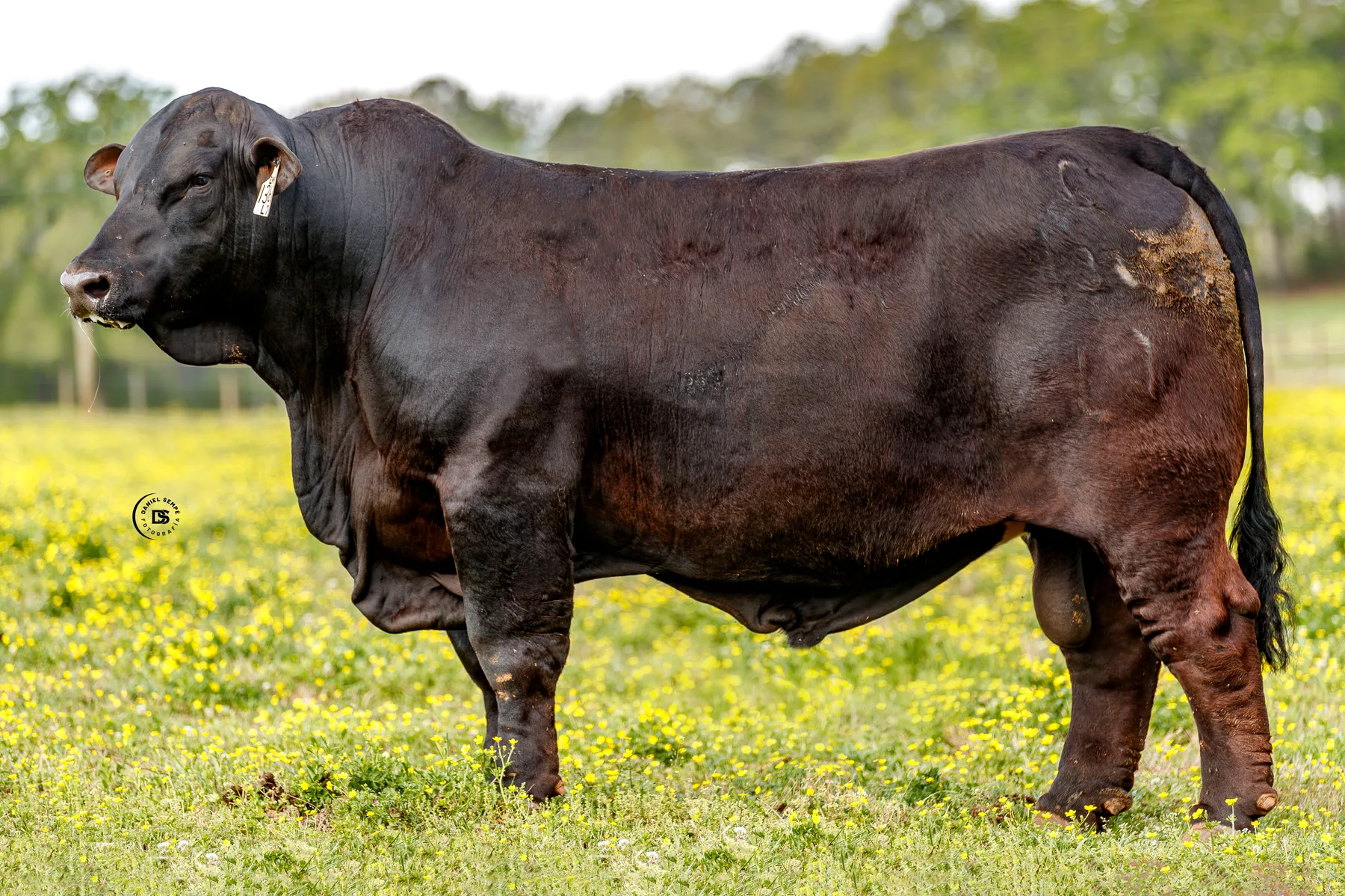
Numbers don't fix bad feet. Before you bid, walk the animal:
- Even, deep-heeled hoof structure with no claw rotation.
- Sound front-end set with adequate width through the chest.
- A hip and rump that ties cleanly into the pin set.
- Adequate frame and capacity for the climate you'll run them in.
This is especially critical when buying Brangus bulls for sale. A bull who can't walk pasture in July in the Southeast is not going to settle cows, no matter what his EPDs say.
4. Ask About the Breeding Decisions
The fastest way to test a Brangus breeder is to ask why a particular mating was made. The right answer sounds like:
"We bred this dam to that sire because she needs more rib shape and the sire's daughters are coming in deep-bodied. We also wanted to bring CED up — her last calf was a 92-pound bull and we didn't love that."
The wrong answer sounds like:
"He was the bull we owned that year."
Real breeders make intentional matings. Traders shuffle inventory.
5. Check the Health and Vaccination Program
Registered Brangus cattle moving across state lines need a current Coggins, breeding-soundness exam (for bulls), pregnancy verification (for bred females), and a documented vaccination program. Reputable Brangus breeders provide all of this without being asked. Ask anyway.
Brangus Bulls vs. Brangus Heifers vs. Brangus Donors
Different buyers need different lots. Here is how the Las Paloma's Ranch program organizes its offerings, and how most reputable Brangus breeders structure theirs.
Brangus Bulls for Sale
Bulls are the fastest way to upgrade a commercial cow herd. A single registered Brangus bull will service 25 to 35 cows in a season, and his genetics will show up in every calf for two to four calving seasons. When buying bulls, prioritize:
- Calving ease for heifer matings, growth for mature cows.
- Scrotal circumference and BSE pass.
- Disposition — Brangus bulls should be docile enough to work in tight quarters.
Brangus Heifers for Sale
Bred heifers are the most cost-efficient way to expand a herd while improving genetics. Look for confirmed-bred status (palpation or ultrasound documented), known service date, and pelvic measurement. The right open registered Brangus heifer is also a great purchase — but only if she has the maternal pedigree to justify the wait.
Brangus Donors and Embryos
Donors are the apex of the program. A proven Brangus donor is producing flushes of high-value embryos every cycle, and her IBBA-registered daughters become the cow herd of tomorrow. Donor pricing reflects all of that. When buying into the donor side of the market, work with established breeders who can talk you through the cow's flush history, conception rates, and the genetic potential of each mating.
Why Buy Brangus Cattle in the Southeast
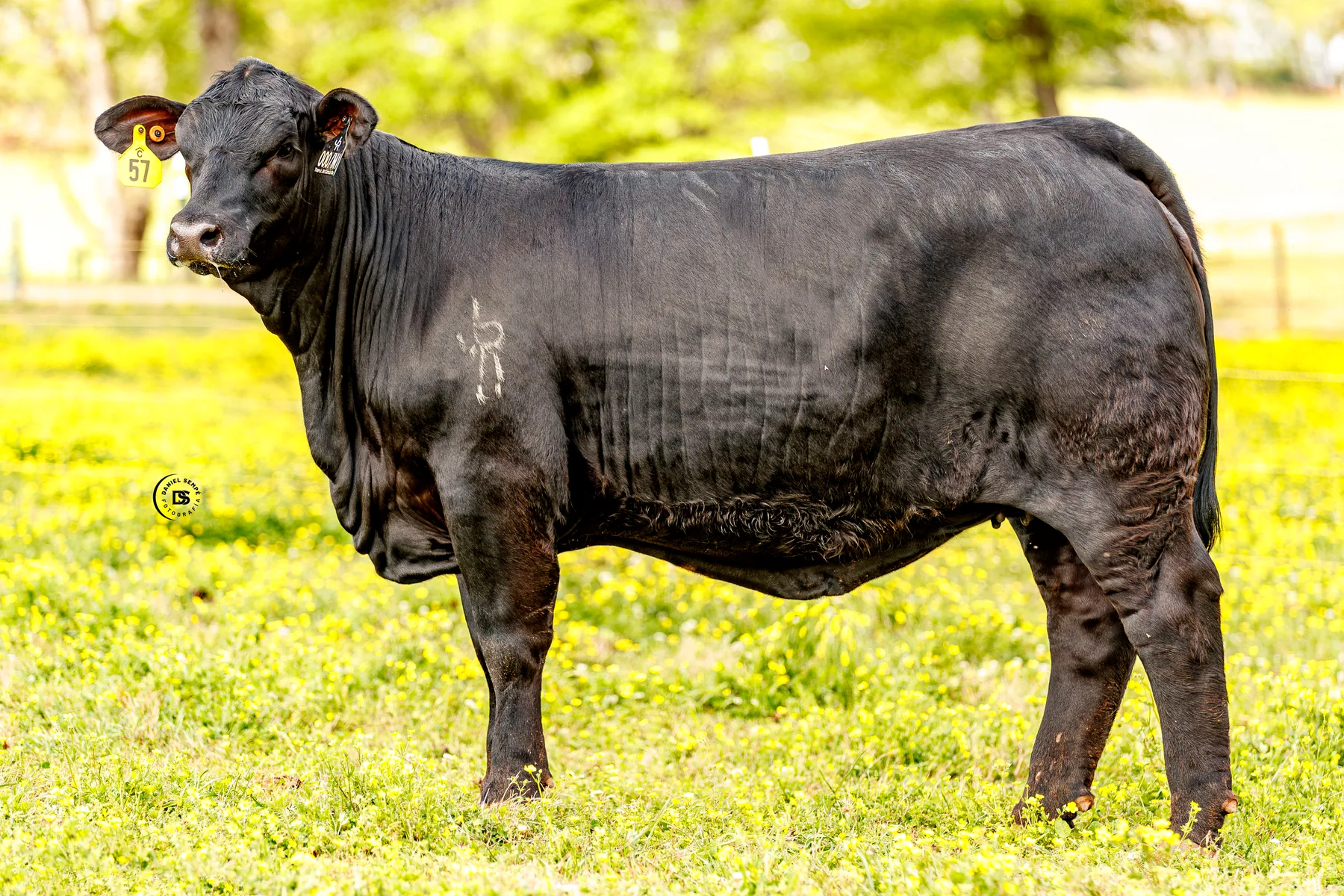
Brangus genetics were specifically developed for hot, humid, parasite-pressure environments — exactly the conditions across Georgia, Alabama, Florida, Mississippi, and the rest of the Southeast. The 3/8 Brahman influence delivers heat tolerance, parasite resistance, and longevity that straight British-breed cattle simply can't match below the gnat line. The 5/8 Angus contribution brings carcass quality and marbling.
If you operate anywhere from the Carolinas down to the Gulf, sourcing from regional Brangus breeders offers some real advantages:
- Acclimation — animals already adapted to your forage, parasites, and climate.
- Shorter haul — less shrink, less stress, less risk of pneumonia after delivery.
- Pasture references — you can usually drive over and see the cow herd in person.
- Sale-day support — most regional breeders know each other and will back up a private treaty deal.
Las Paloma's Ranch sits in Newnan, Georgia, just south of Atlanta, and we consign females to multiple sales across the region — including the 2026 A Cut Above Sale in Cullman, Alabama.
The IBBA Registration Certificate, Decoded
When a Brangus breeder hands you an IBBA paper, this is what you should be reading:
| Field | What it tells you |
| ------------------- | ----------------------------------------------------------------------------------------- |
| Registration # | Unique identifier (R10###### Brangus, UB10###### UltraBlack). |
| PHN + Location | Producer Herd Number, the breeder's tag location (e.g., 209M3 LH = left hip). |
| Generation | How many generations recorded above this animal — higher means deeper documented lineage. |
| Color & Scur Score | 1 is solid black, no white; P is polled, no scurs. |
| Generation pedigree | Three generations on sire and dam side, with each ancestor's registration. |
| Ownership history | Effective dates of every transfer — protects you against unrecorded sales. |
| EPDs (current run) | Subject EPDs with accuracy values, plus sire and dam EPDs for context. |
| Production records | Adjusted weights and ratios for the subject and progeny if applicable. |
If you see "[PV]", "[SV]", or "[DV]" after a name, that is the IBBA's parentage verification flag — PV = both parents verified, SV = sire only, DV = dam only. Verified pedigrees are always preferred for breeding stock decisions.
What Sets Las Paloma's Ranch Apart
We are a working Brangus seedstock program in Newnan, Georgia, founded by Pepe Medina with deep family roots in cattle ranching. Our About page tells the longer story, but here is the short version of what we do differently:
- No mock data on our catalog — every donor and sire on this site corresponds to a real IBBA registration certificate, downloadable as a PDF on each animal's page.
- Verified parentage on the vast majority of our animals.
- Co-ownership relationships with leading programs — including Cavender Brangus and Double W Ranch — which keeps elite genetics flowing through our herd.
- Photographed and pedigreed lots at every sale, so what you see in the catalog is exactly what shows up at the unloading chute.
Browse our registered Brangus donors, our herd sires, or the current sale schedule to see how the program is structured today.
Frequently Asked Questions About Buying Brangus
How much does a registered Brangus bull cost? Pricing varies widely. Coming-2 yearling bulls from established Brangus breeders typically range from $4,500 to $15,000+ depending on EPDs, accuracy, and pedigree depth. Proven herd sires with documented progeny records can move significantly higher.
Are Brangus cattle good for hot climates? Yes — that's the entire reason the breed exists. The 3/8 Brahman component delivers heat tolerance, parasite resistance, and dark pigmentation that protects against eye cancer and sun damage.
How do I verify a Brangus breeder is legitimate? Check that they are an active member of the IBBA, look up the breeder ID on each registration certificate, and confirm that ownership transfers are recorded. Reputable Brangus breeders also have a public catalog of their cow herd and a verifiable physical address.
What is an UltraBlack Brangus? UltraBlack (UB) is an IBBA-registered composite that is more than 50% Angus and at least 1/4 Brahman, registered through the same association. UltraBlack animals carry the same maternal and adaptability traits as full Brangus with a slightly higher Angus percentage.
Should I buy bred females or open heifers? Bred females give you a calf within a defined window and are the fastest way to expand a herd. Open heifers are cheaper up-front and let you select the service sire yourself. Both are legitimate strategies — the right answer depends on your facilities, your AI program, and your time horizon.
Ready to Talk?
If you're shopping registered Brangus and want to compare programs, we'd love to walk you through the LPR cow herd — in person, by phone, or by video call. The best Brangus breeders are happy to show you the females behind every bull they sell, and that is a standard we hold ourselves to.
Reach out through our contact page, or take a look at the lots we are taking to our next sale on the sales page. Either way, do your homework, ask hard questions, and buy from a program whose cow herd you trust.
— Las Paloma's Ranch · Newnan, Georgia · IBBA Member 20152994
Ready to elevate your herd?
Reach out to discuss genetics, ranch visits, or a breeding consultation with Pepe and our team.
Contact us